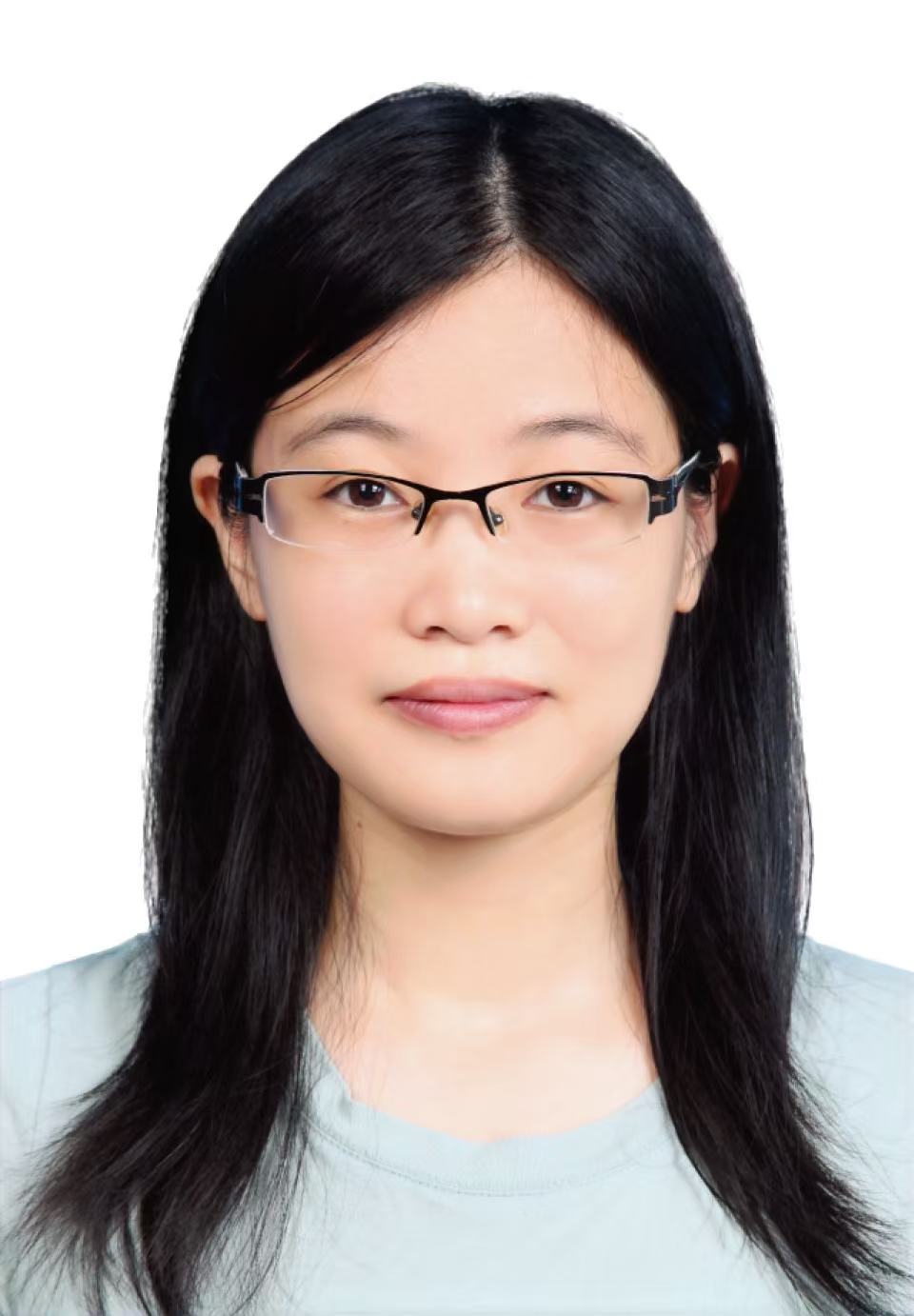
The 2nd Workshop on AI-Ready Data for Science Discovery

Date: November 12, 2026 | Location: Shenyang, China

About the Workshop

Scientific discovery is entering a new era—powered by artificial intelligence (AI) and machine learning (ML). These technologies are enabling breakthroughs across disciplines such as biology, physics, chemistry, and materials science. However, one major bottleneck remains: the lack of high-quality, domain-specific datasets that are truly AI-ready.

The 2nd Workshop on AI-ready Data for Science Discovery (ADSD 2026) aims to address this critical challenge by building a vibrant, interdisciplinary community focused on the creation, curation, and benchmarking of scientific datasets. Hosted at ICDM 2026, ADSD will serve as a platform for researchers, practitioners, and data professionals to collaborate on shaping the future of scientific data mining.

Call for Papers

We welcome a wide array of submissions focused on AI-Ready Dataset for Science Discovery, encompassing topics such as theories, algorithms, applications, systems, and tools. These topics include but are not limited to:

Data Acquisition and Integration

  • Automated methods for constructing AI-ready data from experiments, simulations, and publications.
  • Methods for multimodal datasets integration, including text, images, tables, and numerical data.
  • Retrieval-augmented generation (RAG) and literature mining for scientific knowledge extraction and organization.
  • Scientific knowledge graphs, ontologies, and semantic data integration.

Data Curation, Quality Control, and Enrichment

  • Methods for dataset collection, annotation, documentation, and metadata generation.
  • Methods for synthetic data generation and data enrichment.
  • Methods for data consistency, completeness, provenance, and versioning.
  • Automated data refinement, outlier detection, and correction to improve dataset reliability.
  • Systems and tools for continuous dataset integrity monitoring, including expert-in-the-loop quality control.

Benchmarking and Evaluation Frameworks

  • Standardized benchmarks across scientific domains, such as biomedicine, materials science, and environmental modeling.
  • Methods for developing standardized metrics e.g. accuracy, robustness, scalability, and interpretability, tailored to domain-specific data characteristics.
  • Methods to evaluate data quality, AI-readiness, and suitability for downstream scientific tasks.
  • Methods to evaluate the data interpretability, robustness, and trustworthiness.
  • Open platforms for standardized benchmarking.
  • Benchmarks and protocols for evaluating end-to-end data pipelines and agentic workflows.

Applications in Scientific Research

  • Tools and agentic workflows for publication summary, knowledge discovery, and trend analysis.
  • AI-ready data and data-centric methods for scientific foundation models and domain-specific AI.
  • AI for scientific challenges like drug discovery, climate modeling, and material prediction, etc.
  • Closed-loop scientific workflows connecting data, AI models, simulations, experiments, and laboratory automation.

Submission Details

We invite the submission of regular research papers (4-10 pages), including the bibliography and any possible appendices. Submissions must be in PDF format, and formatted according to IEEE Conference Template. Submissions must be anonymized for review. Authors should remove author names, affiliations, acknowledgments, and other identifying information from the manuscript before submission. Submitted papers will be assessed based on their novelty, technical quality, potential impact, insightfulness, depth, clarity, and reproducibility. All the papers are required to be submitted via the ADSD Submission. (Important: please double-check that you are submitting to the correct workshop. If you previously submitted through an earlier link, please resubmit using the current ADSD Submission link.) By the unique ICDM tradition, all accepted workshop papers will be published in the dedicated ICDMW proceedings published by the IEEE Computer Society Press. For more questions about the workshop and submissions, please send email to pfwang@cnic.cn.

Important Dates

* All deadlines are at 11:59 pm in the Anywhere on Earth timezone

Keynote Presentations

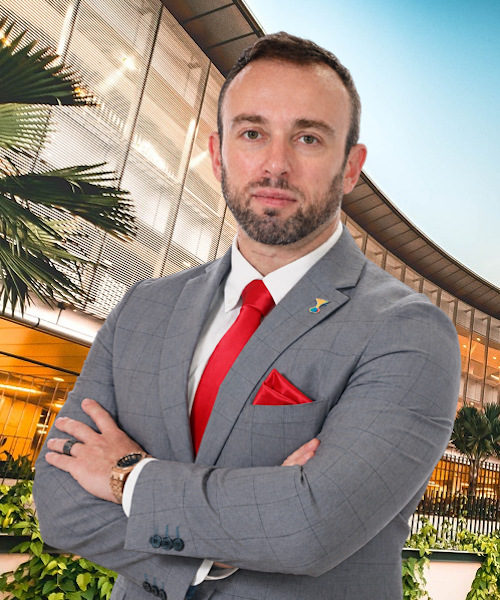
Erik Cambria

Keynote 1

Erik Cambria, Full Professor

Nanyang Technological University

The Dual Revolution of AI: Technological Transformation and Human Decentering

AI is often described as the fourth technological revolution, following the agricultural, industrial, and internet revolutions. However, beyond its technological impact, AI also represents a fourth major decentering shift in human history. After Copernicus displaced humans from the center of the universe, Darwin from the summit of biological life, and Freud from the center of the mind, AI now challenges humanity’s presumed monopoly on intelligence. By examining AI through historical, philosophical, technological, and societal lenses, this paper explores the rise of cognitive decentering and its implications. More info at https://link.springer.com/10.1007/s12559-026-10569-8

Biography

Erik Cambria is a Professor of Artificial Intelligence at NTU CCDS, where he also holds the appointment of Provost Chair in Computer Science and Engineering, and a Visiting Professor at MIT Media Lab. He is an IEEE Fellow and has founded several AI companies, such as SenticNet, offering B2B sentiment analysis services, and finaXai, providing explainable financial insights. Prior to joining academia, he has worked at HP Labs and Microsoft Research. Today, his research focuses on neurosymbolic AI for interpretable and explainable affective computing in domains like mental health, climate resilience, and socially responsible investing. Prof Cambria is ranked in Clarivate’s List of World’s Top 1% Scientists since 2022, is recipient of many awards, e.g., AI’s 10 to Watch, and was featured in Forbes as one of the 5 People Building Our AI Future.
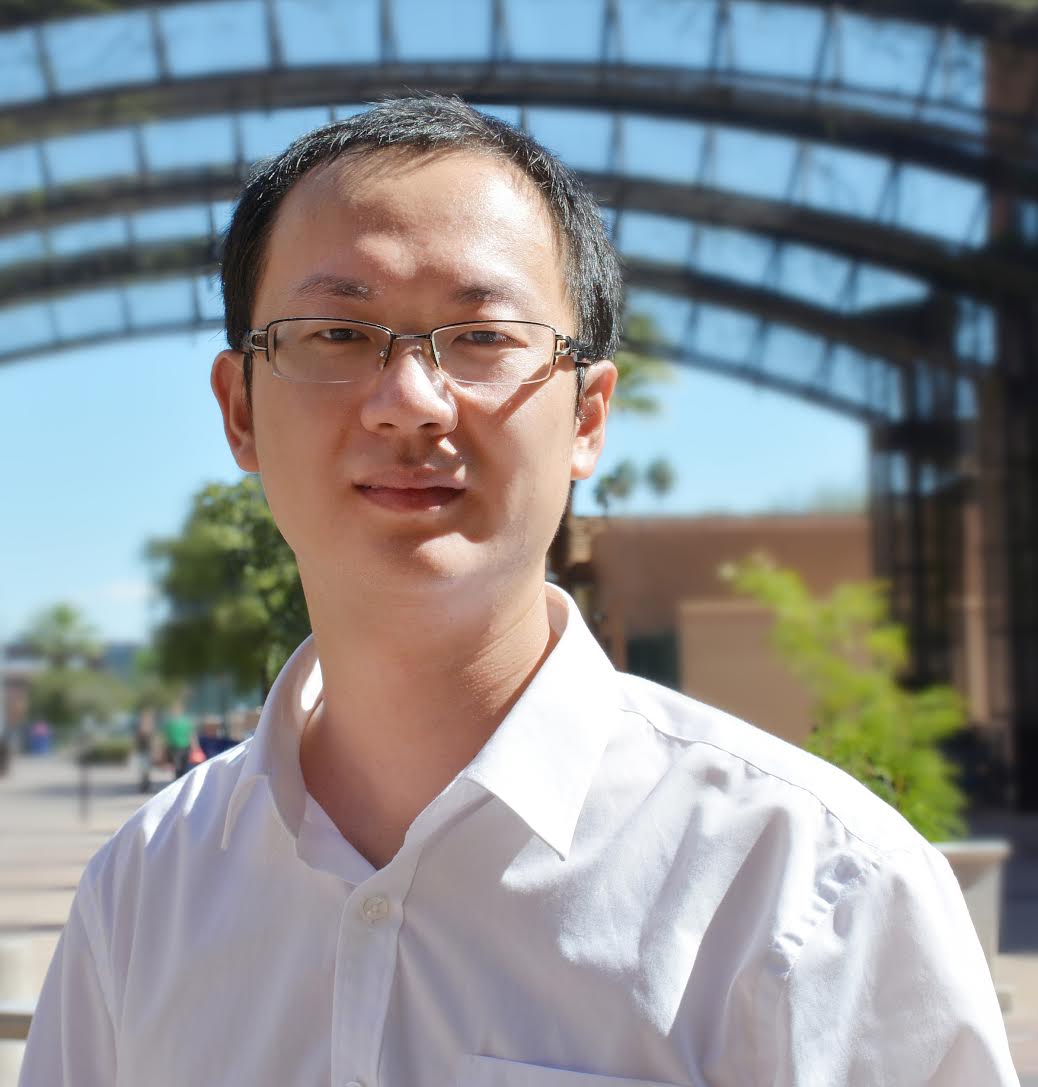
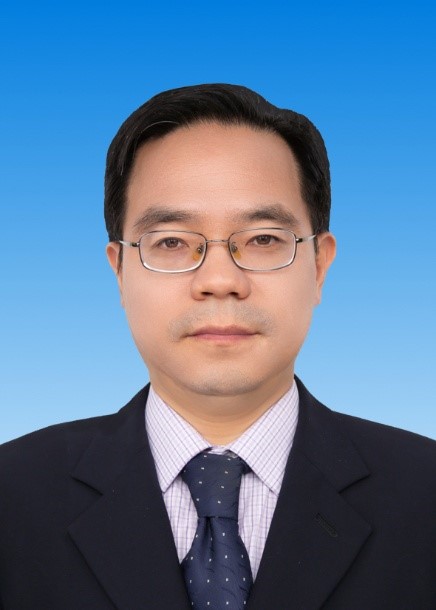
Xia Hu

Keynote 2

Xia Hu, Lead Scientist

Shanghai Artificial Intelligence Laboratory

End-to-end Agent Safety: Data, Algorithms and Systems

As AI systems become more capable and autonomous, safety risks extend across the full lifecycle, from training data and model development to agent use. Harmful data can affect model behavior, while agents can turn model errors into real-world actions through planning and tool use. Failures within AI systems and misuse by users can combine, causing risks to grow and spread. New capabilities and changing environments also bring risks that existing safety checks may miss. These challenges make end-to-end AI safety increasingly important, as the safety of individual models does not ensure safe behavior across the systems in which they operate. This talk therefore presents our solutions for end-to-end AI safety across the AI lifecycle, from data through models to agents.

Biography

Dr. Xia “Ben” Hu is a national-level talent and is currently the Lead Scientist at Shanghai AI Laboratory. Previously, he was Full Professor, and Director of the Data Science Institute, at Rice University, USA, and co-founder of AI POW LLC. Dedicated to machine learning and AI research, he has published over 200 papers in top conferences/journals like ICLR, NeurIPS and KDD, with over 45,000 citations. His leading works include AutoKeras (a top AutoML framework), NCF algorithm (officially recommended by TensorFlow, single paper cited over 10,000 times), and anomaly detection systems used by NVIDIA, Apple, etc. His papers have received several Best Paper (Candidate) awards from venues such as ICML, WWW, WSDM, ICDM, AMIA and INFORMS. He has won honors such as NSF CAREER Award and KDD Rising Star Award. He was the conference General Co-Chair for WSDM 2020 and ICHI 2023, Program Co-Chair for AIHC 2024 and CHASE 2025.

Program

8:50–8:55
Welcoming and Introduction
8:55–9:40
Keynote 1: Prof. Erik Cambria, The Dual Revolution of AI: Technological Transformation and Human Decentering
9:40–9:50
Group Photo
9:50–10:10
Coffee Break
10:10–10:55
Keynote 2: Dr. Xia Hu, End-to-end Agent Safety: Data, Algorithms and Systems
10:55–11:08
Development and Application of National Standard for Coding specification for Scientific Data Identification
11:08–11:21
Qualifying Reduced Scientific-Data Views as Training Interfaces for Scientific AI
11:21–11:34
OCR Evidence Decomposition and Question-Conditioned Fusion for Scene-Text Visual Question Answering
11:34–11:47
Curating Synthetic Scientific Questions for RAG Evaluation: Source Identification, Evidence Retrieval, and Answerability
11:47–12:00
Bridging the Causal Gap in Spectral Intelligence: A Textbook-Grounded Knowledge Corpus for Infrared Spectroscopy
12:00–13:00
Lunch Break
13:00–13:13
When Do LLMs Help with Feature Selection? A Systematic Empirical Study
13:13–13:26
Benchmarking Traceable LLM Workflows for Specification and Test Generation
13:26–13:39
Multi-dimensional Evaluation of Solar Energy Droughts of Photovoltaic Power Generation in China under Climate Change
13:39–13:52
SorpBench: Claim-Calibrated Learning from Small Paired Chemistry Experiments
13:52–14:05
Cross-Domain Evaluation of Battery Life Prediction with Public and Industrial-Scale Datasets
14:05–14:18
Data Cooperatives for AI-Ready Data: Participatory Governance and Social Value
14:18–14:31
Can LLMs Safely Operate Hardware? A Benchmark for Development-Board Operation Safety
14:31–14:44
LLM-Based Metadata Curation for AI-Ready Science: Generation, Harmonization, and Debate-Driven Quality Estimation
14:44–14:57
Reconstructing Boundary Layer Wind Profiles with Machine Learning: A Comparative Study on IGRA Radiosonde Data
14:57–15:10
Closing Remarks and Acknowledgments

Organizing Committee

Steering Co-Chairs

Yuanchun Zhou

Yuanchun Zhou

Chinese Academy of Sciences

Hui Xiong

Hui Xiong

The Hong Kong University of Science and Technology
(Guangzhou)

Xiansheng Hua

Xiansheng Hua

Tongji University

Program Co-Chairs

Pengfei Wang

Pengfei Wang

Chinese Academy of Sciences

Yanjie Fu

Yanjie Fu

Arizona State University

Pengyang Wang

Pengyang Wang

University of Macau

Jiaxu Cui

Jiaxu Cui

Jilin University

Yi Du

Yi Du

Chinese Academy of Sciences

Poster Chair

Ran Zhang

Ran Zhang

Zhongguancun Academy

Jiajia Wang

Jiajia Wang

Chinese Academy of Sciences

Web Co-Chairs

Junjie Ye

Junjie Ye

Chinese Academy of Sciences

Pengjiang Li

Pengjiang Li

Chinese Academy of Sciences

Ping Xu

Ping Xu

Chinese Academy of Sciences

Program Committee

Contact

For inquiries, please contact us at pfwang@cnic.cn.

Data Sharing Supporters